Logo200.png)
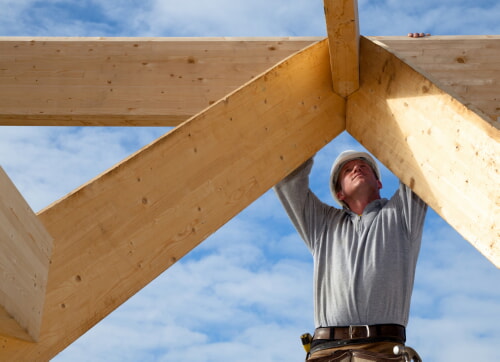
Carpentry is an age-old profession that involves crafting, building and creating things out of wood, including houses, cabinets, furniture and more. Regardless of what type of carpentry you do and whether you are in trade school, relatively new to the trade, or a seasoned pro, you need the hand tools to make your craft possible.
Those who are considering going into the field make about $51,390 per year (median pay) or $24.71 per hour. As of 2022, there were 956,300 carpenter jobs and 8,600 more will be needed by 2032. You can go to trade school or work as an apprentice to learn carpentry skills. Most employers will only require a high school diploma, but you do have to have excellent math skills.
The Pros and Cons of Being a Carpenter
Some of the pros of being a carpenter include:
- You can work with your hands. Those who love to build things with different materials, especially wood, will enjoy working in the carpentry field.
- You increase your skills every day.
- You work on your feet – no sitting behind a desk, getting bored.
- You can work normal hours.
- You can earn higher wages. If you work for a company that has a union, you can earn even more. If you decide to start your own business, you can really amp up your earnings if you can market yourself and do great work.
- You don’t need a college education. You need a high school diploma and excellent math skills.
Despite all the pros of being a carpenter, there are some cons. But if you can get past them, you can have a great career. The cons of being a carpenter include:
- You have a risk of being injured on the job.
- The job is physical, though this isn’t a con for those who prefer physical labor.
- Training can take up to five years, but you can train on the job.
Hand Tools Required by Carpenters
Carpenters require many tools to do their job, but some of the more popular hand tools include:
1. Claw Hammer
This is one of the most basic tools a carpenter requires. The claw hammer comes in different weights – the most popular is the 20-ounce size. They come with wooden, fiberglass and steel handles. For constant use, a fiberglass or steel handle will last longer, though they don’t absorb vibration as well as wooden handles.
2. Tape Measure
Carpenters require an accurate tape measure. It should be retractable and at least 25 feet long, though sometimes shorter tapes come in handy. Whichever tape measure you choose, make sure the hook on the end is attached firmly, or you won’t get an accurate measurement.
3. Utility Knife
Woodworkers always need to cut something or carve out a piece of wood to make it fit. A utility knife, sometimes referred to as a box blade, is perfect for all those small jobs.
4. Moisture Meter
While homebuilders don’t really need a moisture meter, cabinet builders, finishing carpenters and crafters require a moisture meter to determine how much moisture is in the wood. Wood with similar moisture content needs to be used on certain projects, or it will finish drying unevenly.
5. Chisels
Everyone who works with wood needs chisels. Not only are they used for carving, but they are also used to clean out saw cuts and joints. Look for chisels made from chromium-vanadium alloyed steel or high-alloy carbon steel. Chisels come in several sizes.
6. Levels
All woodworkers need at least one level. Those in home construction need a 6-foot level and a torpedo level. Both can be used to check level and plumb.
7. Screwdrivers
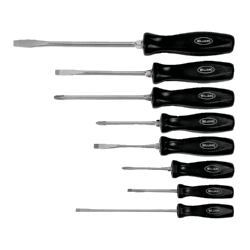
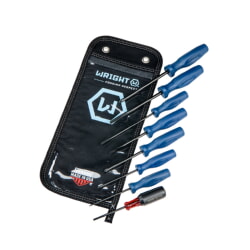
Every carpenter needs a good set of flat-head and Phillips screwdrivers. Additionally, everyone should have one large flat-head screwdriver they can use for prying things, such as paint can lids or bent nails that a claw hammer won’t fit under.
8. Combination Square
A combination square is either 6 or 12 inches. Most use the 6-inch size, as it’s easier to carry around. The triangle shape allows you to square the ends of lumber. You can also use a combination square to measure angles. Always make sure to get a metal one, as the plastic combination squares don’t last.
9. Hand Plane
Every carpenter should have a hand plane to flatten wood, add curves to wood, or square a piece of wood. You can also smooth joints with it. Be sure to get one with an adjustable blade.
10. Calipers
You need a set of calipers, which are useful for measuring inside and outside openings. They come in plastic and metal. While the plastic calipers are cheaper, metal calipers last longer. Measure slot diameters, dado widths, hole diameters and more with calipers.
11. Clamps
Carpenters need several sizes of clamps, especially for furniture and cabinet building. You’ll need clamps for 45-degree and 90-degree joints, plus pipe clamps to reach wide pieces. You can find many types of clamps, including F-clamps, K-clamps, C-clamps and strap clamps.
12. Hand Saws
Carpenters should have at least one high-quality hand saw, though a collection of various saws can make your job much easier. Various types of saws include coping, tenon, dovetail, fretsaw, mini saw, and hand miter saws.
Visit Abolox for All Your Hand Tool Needs
Abolox carries several types of quality hand tools, including name brands. You can fill your toolbox for less with Abolox. Browse through our hand tools categories to find what you need. Automotive technicians also need personal protective equipment, which you can also find on our site.
If you have any questions about our tools and personal protective equipment or if you need something you don’t see, contact us by filling out the contact form or calling us at (321) 610-1896 for more information or special requests.
Tagged Products