Logo200.png)
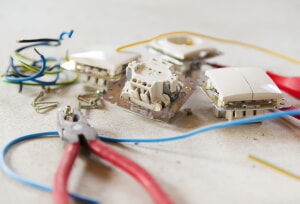
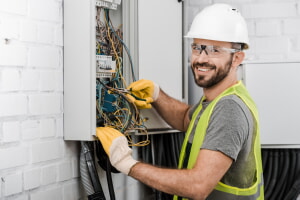
When you choose to make a career as an electrician, you don’t have to go to a four-year college. Electricians also make a good salary, and the job offers stability since, no matter the economy, people need electrical services. However, being an electrician has its cons, such as years of training and physically demanding work. It can also be a dangerous job.
According to the Bureau of Labor Statistics (BLS), electricians made over $60,000 in 2022. The BLS estimates that another 49,200 electricians will be needed to fill jobs. Additionally, there are plenty of opportunities to work for yourself as an electrician once you get all your licenses.
Electrician Responsibilities
The responsibilities of an electrician depend on your specific job, whether you work as a commercial electrician, residential electrician, or for a utility. Responsibilities may include:
- Installing control systems, lighting, and wiring in existing buildings and new construction.
- Planning the electrical system for new construction, whether residential or commercial, including outlet placement, heating outlets, light fixtures and ventilation systems.
- Installing brackets and hangers to support conduit and other electrical products.
- Reading circuit diagrams, blueprints, and other technical documents.
- Testing electrical products and systems that are not working properly.
- Connecting electrical wires to fixtures and components to form electrical circuits.
- Testing completed electrical circuits.
- Training other electricians.
- Supervising other electricians.
- Inspecting transformers, circuit breakers and other electrical components for faults.
- Installing switches, relays, circuit breaker panels, and other electrical distribution and control equipment.
- Repairing, replacing, or upgrading outdated and / or faulty electrical equipment, wiring, and fixtures.
- Isolating faults to make them safe for removal and replacement.
- Performing maintenance procedures to keep lighting, wiring and control systems working.
Hand Tools for Electricians
Electricians often have to purchase their own tools. Every electrician should have:
1. Channel Lock Pliers
Sometimes called joint pliers or water pump pliers, channel lock pliers come in varying lengths with varying opening widths. We carry several channel lock pliers at Abolox with varying features, including:
- Multiple parallel jaw positions
- Non-slip performance
- Serrated jaws for maximum gripping power
- Polished heads to extend tool life
2. Diagonal Pliers
Sometimes called dykes, diagonal cut pliers come in many lengths with varying opening widths. You can use them to cut and strip wires. Abolox carries several types of diagonal cut pliers with various features, including:
- Ergonomic design
- Greater contact area
- 46 percent greater strength and cutting force than conventional pliers
- Safe handles
- Striated jaws
- Exceed ASME B107.500 standard
3. Linesman’s Pliers
Linesman’s pliers also come in varying sizes. Abolox carries several types of linesman’s pliers with features including:
- Designed for maintenance and electrical equipment installation
- Polished faces to resist corrosion
- Induction-hardened cutting edges to stay sharp longer
- Diamond-serrated jaws for a solid grip on wires
- Durable double-dipped plastic handles
4. Wire Strippers
Abolox carries several types of wire strippers used for stripping various-sized wires. Features include:
- Durable double-dipped handles with air cushion pockets
- Longer curved handles for extra leverage
- Serrated gripping jaws in the nose to use as pliers
- Built-in bolt cutters to cut 6-32 and 8-32 screws
5. Voltage Tester
Electricians should have at least one, if not two, voltage testers. Abolox carries several types with various features, including:
- Neon indicator for easy visibility
- 16 gauge wire
- Detects voltage in the 150 to 250V range
- Ideal for domestic electrical fault-finding
- Clear, transparent handle
- Plastic protection up to the tip
- High-performance alloy steel
- Nickel-plated blade
- Pocket clip
6. Insulated Screwdrivers
Insulated tools, including insulated screwdrivers, allow you to work on live equipment up to 1,000 volts. Abolox carries several insulated screwdrivers with various features, including:
- Three-component ergonomically designed handle
- Maximum grip, even with oily hands
- Color-coded handles to indicate tip type
- Tip type symbol on the bottom of the handle
- Chrome blades to prevent corrosion
- Easily cleaned
- Blades have a bolster to use with a wrench when you need extra torque
7. Saws
Electricians need various saws, including jab saws (sheetrock saws) and hacksaws. Abolox carries several types of saws with various features, including:
- Cuts drywall, plywood, wallboard and plastic
- Blade cuts in both directions
- Sturdy blade with sharp point to punch through drywall
- High blade tension for fast and accurate cuts
- Easy-to-handle retaining screws
- Some hacksaws can be used as compass saws
- Alternative 55-degree blade mounting
8. Hammer
Electricians should have at least one hammer, although they may find that they need a couple of different types, depending on their jobs. Abolox carries several types of hammers, including:
- Cross-pein hammer
- Dead blow hammer
- Sledgehammer
- Claw hammer
- Ball-pein hammer
- Soft face hammer
- Shot-filled soft face hammer
- Non-sparking brass hammer
9. Power Drill
The best power drills to have are battery-operated drills, so you don’t have to worry about finding an outlet on construction sites or when the power is out. You can carry two or three batteries in the event you can’t get one charged right away.
10. Drill Bits
An electrician should have drill bits for metal, concrete and wood. Abolox carries several types of drill bits, including:
- Carbide
- Aircraft extension
- Cobalt
- Jobber length
- Mechanic’s length
- Nitride
- Screw machine
- Split point
- Hex shank
- Combination drill tap
- Extra long
11. Tape Measure
An electrician needs at least one tape measure but should have a small one for tight spots, a 25-foot tape measure and a spool / reel tape measure.
12. Magnetic Tray
Magnetic trays help keep nuts, bolts and screws from getting lost or kicked around.
Contact Abolox
Whether you are just starting your electrician’s career by going to a tech school, are just out of tech school, or are an electrician with many years of experience under your belt, Abolox has several of the tools you need to have in your tools box.
We also carry personal protective equipment for electricians, including gloves, fire-resistant clothing, goggles, safety glasses and face shields. Visit Abolox to order the electrician’s hand tools you need. If you can’t find what you are looking for, call the office, and we’ll source it for you.
Tagged Products


