Logo200.png)
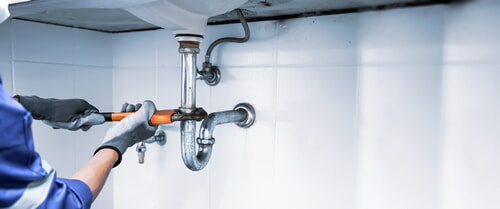
What Hand Tools Does a Plumber Need?
The last thing a homeowner or renter wants is an overflowing toilet, clogged sink or no water at all. These are the things that make most of us dependent on plumbers. And when they show up, we always hope they have the right parts and tools to fix whatever went wrong. There’s nothing worse than when a plumber determines what the problem is and then has to leave to pick up a part or get a special tool. That just adds hours to not having water or having a clogged or broken fixture.
Plumbers hate leaving a job just to have to pick up something to finish it, too. It makes them late for their next call. Most plumbers carry a truck full of tools to help them do their jobs – and those who have been on the job for many years usually have the special tools as they run into situations that require them early in their careers. Abolox carries hand tools that plumbers need to do their jobs efficiently.
Plumbing Jobs
Plumbers are in high demand. Since there’s always a need for plumbers, even when the economy is bad, they make money. Depending on where you want to take your skills, you can move up in companies or even start your own company and find plenty of work. The Bureau of Labor Statistics estimates that the United States will need nearly an additional 11,000 plumbers by 2032.
Because you can go to trade school to learn plumbing, you will have very little – if any – student loan debt. You can even avoid that cost by becoming an apprentice to a licensed plumber. While an apprenticeship takes longer to get the experience you need to get licensed, you get paid instead of paying for your education.
If you are the type that gets bored with doing the same thing over and over again, you won’t have to worry about that in a plumbing job. Every day is different – different problems to figure out and different jobs to work on.
When you become experienced, you can easily start your own plumbing business. You can start with enough money for a van and any tools you don’t already have.
Plumbing Tools at Abolox
Plumbers require several tools to do their jobs effectively. They also need personal protective equipment (PPE). These are just some of the tools and PPE Abolox carries that plumbers need:
- Pipe Cutters Abolox carries several types of pipe cutters, including chain cutters, PVC pipe cutters, and cutter press and pipe cutter sets. Some of the features of our cutters include burnished rollers, a knife to remove burrs, adjustment knobs and adjustable diameter with a cutting disc.
- HacksawsHacksaws with interchangeable blades come in handy for cutting through metal tubing, PVC, and even wood. Abolox carries several types of hacksaws and blades to make your job easier. Some of the features of our hacksaws include an ergonomically designed, centered blade for balance, alternative 55-degree blade mounting, and spring-loaded blade release.
- Pipe Benders Abolox carries pipe benders that can bend pipes from ½-inch to 2-inches thick. Some features may include a hydraulic system, an automatic return piston, an included tripod and a 15-ton capacity.
- Pliers Plumbers can use several types of pliers in their jobs, including electrical pliers to install dishwashers. Abolox carries many types of pliers, including snap ring pliers, locking pliers, slip joint pliers, duckbill pliers, snips, and needlenose pliers.
- Pipe Threaders Not all pipe comes with threads. Having a pipe threader can reduce the hassle of trying to find the correct thread or the correct size pipe with a certain thread. Abolox carries pipe threaders to help keep you on the job instead of traveling back and forth to the warehouse or store to find the correct pipe with the right thread.
- Wrenches and Sockets A plumber’s toolbox isn’t complete without several types of wrenches, including adjustable wrenches, combination wrenches, crowfoot wrenches, flare nut wrenches, and several ratchets and sockets.
Plumbing Safety
It is important for plumbers to have the proper personal protective equipment. While the job may not seem dangerous, it is, especially when working on construction sites or at any height. Plumbers are sometimes exposed to chemicals, flammable materials, and toxic products. Gloves, goggles, and, for some, fire-resistant clothing are just some of the personal protective equipment required. When working on construction sites, plumbers also need safety shoes and hard hats.
Plumbing FAQs
You may be thinking about getting into the plumbing industry but have questions other than what tools and PPE you need. We’ll answer some of the common questions that new and apprentice plumbers may have.
1) How much do plumbers make?
They can make anywhere from $45,000 and up. The national average is around $63,000.
2) Is it worth becoming a master plumber?
Yes. Master plumbers who specialize in certain areas and experienced master plumbers can make over $100,000 per year.
3) Do plumbing jobs require any special skills?
Anyone can learn to be a plumber. However, those with manual dexterity and coordination skills are better, as you sometimes have to bend your body in all kinds of ways to work under sinks and in other tight spots. Interpersonal skills and problem-solving skills are also mandatory.
4) Can plumbing jobs be stressful?
Yes, if you are working in a dangerous situation or trying to solve issues with drainage or water not flowing. In some cases, plumbers face time constraints, especially on new construction.
5) Is it expensive to start my own plumbing business?
It depends on how experienced you are. If you have no skills, you may want to go to school and work an apprenticeship first. If you have experience, your costs will involve administrative costs to set up the business, a van, the cost of fitting the van with shelves, inventory, and the cost of any tools you don’t already have. You can find quality tools and personal protective equipment for less when you shop at Abolox.
