Logo200.png)
Protecting Yourself and Creating a Safe Work Environment
Introduction:
Painting is standard in residential and commercial settings, but it involves potential hazards that can impact your health and safety if proper precautions are not taken. Whether you're a professional painter or a DIY enthusiast, it's crucial to prioritize safety during painting projects. This article provides essential painting safety tips to help you protect yourself, prevent accidents, and create a safe work environment.
Personal Protective Equipment (PPE):
Wearing appropriate personal protective equipment is crucial when working with paints and chemicals.
Here are key PPE items for painting:
- Respiratory protection: Use a properly fitted respirator mask to protect yourself from inhaling harmful fumes, dust, or aerosolized paint particles. Choose the appropriate respirator based on the type of paint and its associated hazards.
- Eye protection: Wear safety goggles or a face shield to shield your eyes from paint splatters, drips, or hazardous chemicals. This is especially important when sanding or using spray paint.
- Skin protection: Cover exposed skin with long-sleeved shirts, long pants, and gloves. Use chemical-resistant gloves to protect your skin from irritation or absorption when handling paint or paint-related chemicals.
- Footwear: Wear closed-toe shoes or boots with slip-resistant soles to protect your feet from accidental spills, falling objects, or injuries from tools or equipment.
Ventilation:
Proper ventilation is crucial to maintaining good air quality and reducing exposure to potentially harmful paint fumes or chemicals.
Consider the following ventilation practices:
- Open windows and doors: When painting indoors, open windows and doors to allow fresh air to circulate and improve ventilation. Use fans or exhaust systems to enhance air movement and remove fumes.
- Use respiratory equipment: If working in enclosed or poorly ventilated spaces, use additional ventilation equipment, such as air purifiers or fans, to help remove fumes and maintain fresh air circulation.
- Follow manufacturer instructions: Ensure that you use paints and solvents in well-ventilated areas as the manufacturer recommends. Avoid painting in confined spaces without adequate ventilation.
Safe Handling and Storage of Paints and Chemicals:
Proper handling and storage of paints and chemicals contribute to a safe painting environment.
Follow these guidelines:
- Read labels and MSDS: Carefully read the labels and Material Safety Data Sheets (MSDS) of paints, solvents, and other chemicals to understand their hazards, proper usage, and necessary precautions.
- Use proper containers: Transfer paints and chemicals to appropriate, labeled containers for easy identification and safe storage. Keep them tightly sealed to prevent spills and minimize exposure to air.
- Store flammables properly: Store flammable paints and solvents in approved, well-ventilated storage areas away from ignition sources, heat, or direct sunlight. Follow local regulations for proper flammable storage.
- Dispose of waste responsibly: Dispose of paint cans, used brushes, rags, and other waste materials in accordance with local regulations. Avoid pouring paint or chemicals down drains or in regular garbage bins.
Ladder and Scaffold Safety:
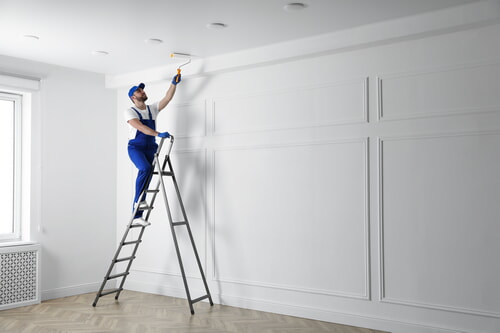
Working at heights, such as when painting ceilings or high walls, requires proper ladder and scaffold safety.
Consider the following:
- Use stable supports: Ensure that ladders and scaffolds are stable and in good condition. Use level ground or appropriate stabilizers to prevent tipping or shifting.
- Follow weight limits: Check the weight limits indicated on ladders and scaffolds and ensure they are not exceeded. Avoid overreaching and maintain a balanced stance while working.
- Maintain three-point contact: Maintain three points of contact (two hands and one foot, or two feet and one hand) when climbing ladders or scaffolds to ensure stability.
- Proper ladder placement: Place ladders at a proper angle (approximately 75 degrees) and secure them to prevent slipping. Do not paint from the top two rungs of a ladder.
Cleanliness and Fire Safety:
Maintaining a clean and organized work area reduces the risk of accidents and promotes fire safety.
Consider the following:
- Clear pathways: To prevent tripping hazards, keep walkways and work areas clear of paint cans, tools, and debris.
- Proper disposal of flammable materials: Dispose of paint-soaked rags, brushes, or other materials in a designated, fire-resistant container. Do not leave them lying around.
- Fire prevention: Keep fire extinguishers readily available in case of emergencies. Avoid smoking or using open flames near paint or flammable materials.
Conclusion:
Prioritizing safety during painting projects is crucial for protecting yourself, preventing accidents, and maintaining a safe work environment. You can create a secure painting environment by wearing appropriate PPE, ensuring proper ventilation, safely handling and storing paints and chemicals safely, practicing ladder and scaffold safety, and promoting cleanliness and fire safety. Remember, safety should never be compromised, and following these guidelines will contribute to a successful and injury-free painting experience.
