Logo200.png)
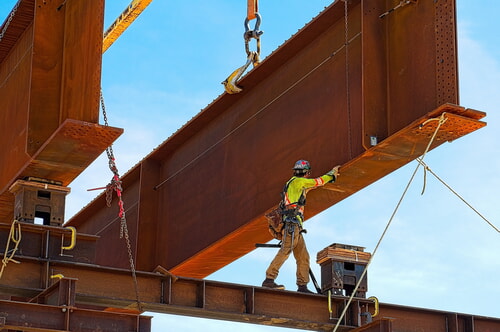
Personal Protective Equipment for the Iron and Steel Industry
To make steel, you need iron ore and a blast furnace. You also need coke and limestone. To make coke, workers crush coal into a fine powder and then heat it to about 1,800 degrees Fahrenheit in a sealed oven – there cannot be oxygen in the oven for this process. The coal melts, which removes most of the oil, tar, nitrogen, hydrogen and sulfur. Once cooked, the coal is called “coke.” After 18 to 24 hours of reaction time, workers remove the coke from the oven, cool it and screen it into pieces of 1 to 4 inches. It is 90 to 93 percent carbon and is very strong. The coke heats up enough to melt iron ore to make steel, which requires temperatures from 1,600 to 2,300 degrees Fahrenheit.
This and other processes in the iron and steel industry need fire-resistant clothing and gloves to protect workers from heat, sparks, and fire. Abolox carries fire-resistant personal protective equipment (PPE) to minimize injuries in the iron and steel industry.
Mills in the Iron and Steel Industry
The main jobs in the iron and steel industry are reducing iron ore, manufacturing pig iron, whether in solid or molten form, converting the pig iron into steel, and manufacturing bars, plates, sheets, rods, wires, and strips of steel.
The United States has two types of mills, most of which are east of the Mississippi:
- Integrated steel mills, which make coke and iron and use basic oxygen furnaces.
- Mini mills, which produce steel from scrap. These mills use electric arc furnaces instead of blast furnaces used for coking and ironmaking.
Occupation in the Iron and Steel Industry
The iron and steel industry has several subindustries that also require the use of personal protective equipment, including:
Construction Laborers:
Workers do physical labor using hand tools. They also transport materials, repair equipment and do other jobs.Extraction Occupations
Workers move heavy items, use hand tools, and repair equipment, among other jobs.Cutting, Punching and Press Machine Setters:
Workers shear, cut, notch, saw, slit, bend, notch, punch and straighten material. They also align metal parts and grind sharp edges and burrs.Electricians.
Workers install, repair and maintain wiring, fixtures and equipment. They connect wires to transformers and breakers, which requires FR safety gear and dielectric safety gear.Extruding and Drawing Machine Setters.
Workers load materials into and operate machines that extrude metals into wires, tubes and bars.Forming Machine Operators, Tenders and Setters.
Workers remove dies, move metal workpieces, forge hammers, and operate machines to shape, taper and form metal.Lapping, Grinding, Buffing and Polishing Machine Operators.
Workers polish metal, sharpen corners and edges, and use grinding tools to remove excess metal and burrs.Heat Treatment Equipment Operators.
Workers load stock in hot furnaces, handle materials, and operate induction, flame-hardening and other heat-treating equipment.Production Helpers.
Workers hold materials, supply materials, clean work areas and equipment and change machine gears.Machine Tool Cutting Operators and Setters.
Workers align parts, use cutting tools, inspect metalwork pieces, and operate forming and cutting machines.Mechanics for Industrial Machinery.
Workers cut and weld metal to repair broken parts and otherwise repair industrial machinery. They also install and adjust industrial machinery.Machinists.
Workers operate machines to create parts.Material Workers, Including Metal and Plastic Workers.
Workers operate conveyors, transport materials, operate cutting, shaping and forming machines, fabricate metal products and lift heavy materials.Metal Furnace Operators (Including Refining Furnaces).
Workers operate the furnaces that melt and refine metal. Furnace types include coal, oil, gas, electric arc, open-hearth, electric induction, and oxygen furnaces. They also put molten metal into molds and drain, remove, and transfer molten metal.Casters and Pourers
. These workers put materials into molds, move materials, regulate the flow of molten metal into the molds, and pour the molten metal into molds.Rolling Machine Operators and Setters.
Workers operate grinders, adjusting machines and shears, and use machines that flatten, roll and plate steel.Welders (Cutting and Fitting).
Welders use flame cutters, soldering irons and machines, brazing equipment, and hand-welding machines. They weld in vertical, flat and overhead positions.Welding, Brazing and Soldering Machine Operators.
These workers add material to workpieces, join separate pieces of metal, and anneal finished workpieces. They also operate soldering, welding and brazing machines.
All of the workers in these occupations work with sharp metal or hot metal and require specific personal protective equipment to minimize risks of injury. They may need cut-resistant gloves or heat-resistant gloves – or a combination. Abolox carries a wide variety of all three types of gloves for working with sharp objects and heat.
Nearly all workers in the iron and steel industry work with or around hazardous machines, equipment and tools and require the appropriate personal protective equipment.
Personal Protective Equipment at Abolox
Many of the jobs workers have in the iron and steel industry require specific personal protective equipment, including:
- Abrasive Handling: Abrasion-resistant gloves and cut-resistant gloves
- Crush and Impact:Impact-resistant gloves
- Dirt, Dust and Grime Protection: Work gloves, goggles
- Heat, Furnaces, and Electrical: Flame-resistant gloves, FR clothing
- Visibility:High Visibility Clothing
- Vision: Safety glasses and goggles
- Marking Steel: Chemical-resistant gloves / waterproof gloves
- Sharp Objects: Cut-resistant gloves and puncture-resistant gloves
Personal protective equipment and clothing provide safety for workers in hazardous conditions. While it cannot prevent every injury, it significantly reduces the risk of severe injuries.
Order Personal Protective Equipment (PPE) at Abolox
When working in a hazardous industry such as the iron and steel industry, you need plenty of personal protective equipment to minimize the risk of workplace injuries. In fact, you should have extra PPE, including gloves, eye protection, high-visibility clothing, hearing protection and fire-resistant clothing stocked up. If abrasive-resistant gloves or fire-resistant gloves are exposed to those dangers enough, their effectiveness will dwindle.
Visit Abolox to find all the personal protective equipment you need to keep yourself or your employees safe while working with the hazards of the iron and steel industry.
