Logo200.png)
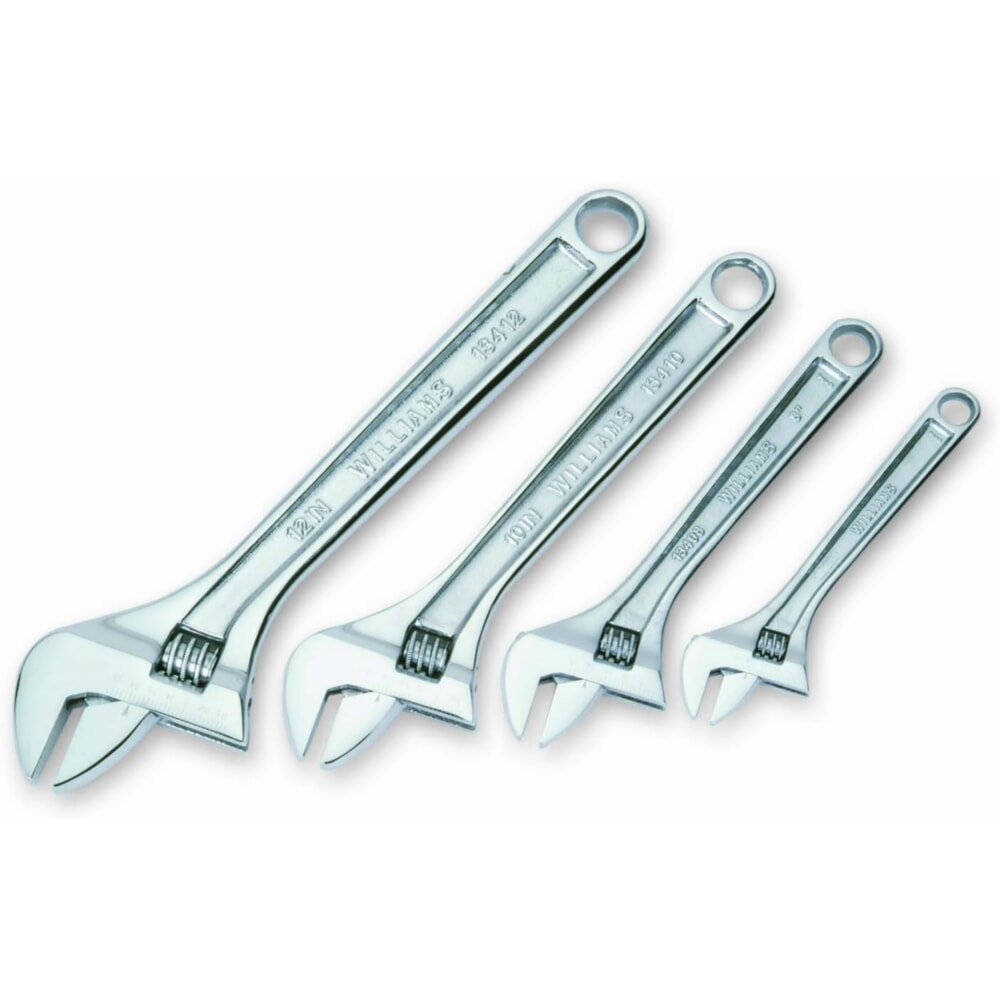
Maximizing the Potential and Overcoming the Downsides of Adjustable Wrenches
Adjustable wrenches are the most handy and useful tool to have available. They can fill the need of a bunch of other tools in a single tool. Below are some of the advantages, applications, and challenges that you will encounter when using adjustable wrenches.
Common Problems and Solutions
1. Slipping Jaws:
Cause: Wear and tear on the jaws or accumulation of debris on the gripping surfaces can lead to slipping.
Solution: Inspect and clean the jaws regularly. If they are worn, consider replacing the wrench or getting replacement jaws.
2. Loose Adjustment Mechanism:
Cause: Over time, the adjustment mechanism may become loose, causing the jaws to shift unintentionally.
Solution: Tighten the adjustment mechanism using the provided screw or nut. If this doesn't work, there may be internal damage, and the wrench may need replacement.
3. Jaw Misalignment:
Cause: Incorrect use or dropping the wrench can result in misalignment of the jaws.
Solution:
- Carefully inspect the wrench for any visible signs of damage.
- If the jaws are misaligned, attempt to adjust them back into place.
- If unsuccessful, consider replacing the tool.
4. Rust and Corrosion:
Cause: Moisture or improper storage exposure can lead to rust and corrosion.
Solution: Regularly clean and lubricate the wrench to prevent rust. If rust has already formed, use a rust dissolver and consider applying a rust-resistant coating.
5. Handle Damage:
Cause: Dropping the wrench or using it as a hammer can lead to handle damage.
Solution: Avoid using the wrench for purposes other than its intended function. If the handle is damaged, it may compromise the tool's integrity, and replacement might be necessary.
6. Inadequate Grip on Round Objects:
Cause: Adjustable wrenches may struggle to provide a secure grip on rounded or smooth surfaces.
Solution:
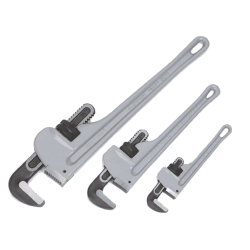
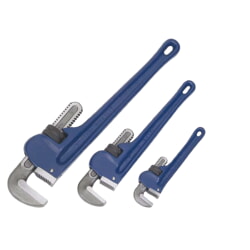
- Consider using a different type of wrench, such as a pipe wrench, when working with rounded objects.
- Wrap the object with a rubber band or cloth to improve grip.
7. Limited Jaw Capacity:
Cause: Some adjustable wrenches may have a limited jaw capacity, restricting their use on larger nuts and bolts.
Solution: Choose a wrench with a more prominent jaw capacity for more extensive applications.
Industries and Expected Uses of Adjustable Wrenches
- Automotive Repair - Adjusting nuts and bolts on car parts, such as tire changes, engine repairs, and general maintenance.
- Construction and Carpentry - Tightening or loosening nuts and bolts on construction materials, scaffolding, and various woodworking projects.
- Plumbing - Tightening and loosening plumbing fittings, nuts, and bolts. Adjustable wrenches are commonly used in conjunction with pipe wrenches.
- Mechanical and Machine Maintenance - Adjusting and securing nuts and bolts on machinery and mechanical equipment during maintenance and repair tasks.
- HVAC (Heating, Ventilation, and Air Conditioning) - Adjusting nuts and bolts on HVAC systems, ductwork, and other components during installation and maintenance.
- Appliance Repair - Adjusting and tightening nuts and bolts on various household appliances during repair or maintenance.
- Electrical Work - Occasionally used for tightening and loosening nuts on electrical conduit fittings. However, caution should be exercised to avoid damage to delicate electrical components.
- Marine and Boat Maintenance - Adjusting nuts and bolts on boat engines, rigging, and other marine equipment.
- Agriculture - Adjusting nuts and bolts on farm equipment, machinery, and irrigation systems.
- DIY and Home Improvement - Various tasks around the house, including furniture assembly, plumbing repairs, and general maintenance.
- Mining and Heavy Equipment Maintenance - Working with nuts and bolts on heavy machinery and equipment used in mining and construction.
- Aviation Maintenance - Adjusting and securing nuts and bolts on aircraft components during maintenance and repairs.
- Manufacturing and Fabrication - Assemble and maintain manufacturing equipment and adjust fasteners on fabricated metal structures.
- Emergency Repairs - Adjustable wrenches are often included in emergency repair kits due to their versatility and ability to handle a variety of fasteners.
- Telecommunications - Adjusting nuts and bolts on telecommunication infrastructure equipment and installations.
Reasons to Use Adjustable Wrenches
- Adjustability - The defining feature of adjustable wrenches is their ability to accommodate different sizes of nuts and bolts. This versatility makes them suitable for various applications without requiring multiple wrenches of varying sizes.
- Single Tool for Multiple Tasks - Instead of carrying a set of fixed-size wrenches, an adjustable wrench can often handle a variety of fastener sizes. This reduces the need to switch between tools, saving time and effort.
- Portability - Adjustable wrenches are compact and lightweight compared to fixed wrenches. This makes them convenient for portable toolkits, especially when space and weight are considerations.
- Adaptability - In emergencies or when quick repairs are necessary, having an adjustable wrench allows for adaptability to different fastener sizes without the need to search for a specific-sized wrench.
- Budget-Friendly - Investing in a good-quality adjustable wrench can be more cost-effective than purchasing an entire set of fixed-size wrenches. This can be especially advantageous for individuals or businesses on a budget.
- Rapid Size Changes - The adjustable nature of the wrench allows for quick size adjustments, enabling users to switch between different nuts and bolts efficiently.
- Hard-to-Reach Areas - Adjustable wrenches can be used in tight or hard-to-reach spaces where a standard wrench might not fit due to its bulky design.
Advantages of Adjustable Wrenches
- Flexible - Adjustable wrenches can accommodate various sizes of nuts and bolts, providing versatility in different applications.
- Convenient - With an adjustable wrench, carrying a set of fixed-size wrenches is unnecessary. One tool can handle a range of fastener sizes, saving space and reducing the need for multiple tools.
- Quick Adjustment - Adjustable wrenches allow for rapid size adjustments, making it easy to switch between different fasteners during a task.
- Good for Emergency Repairs - An adjustable wrench can be used to make quick repairs in emergencies or when a specific-sized wrench is not readily available.
- Budget-Friendly - Adjustable wrenches are often more budget-friendly than purchasing a set of fixed-size wrenches, making them a cost-effective choice.
- Beginner-Friendly - Adjustable wrenches are beginner-friendly and are often recommended for those new to using tools due to their simplicity and ease of use.
Disadvantages of Adjustable Wrenches
- Limited Jaw Capacity - Adjustable wrenches may have a limited jaw capacity, which can restrict their use on larger nuts and bolts compared to specialized wrenches designed for heavy-duty applications.
- Slippage - The adjustable nature of the wrench can lead to slippage if not properly tightened, potentially causing damage to the fastener or injuring the user.
- Misalignment - Misalignment of the jaws may occur, especially with lower-quality adjustable wrenches, affecting the tool's performance and accuracy.
- Bulkiness in Tight Spaces - The design of adjustable wrenches, especially the head and handle, can be bulky, making them challenging to use in tight or confined spaces.
- Potential for Jaw Damage - Adjustable wrenches on hardened or particularly tough materials may damage the jaws over time. Adjustable wrenches may not provide as precise a fit as fixed-size wrenches, potentially resulting in rounding off corners of nuts or bolts.
- Not Suitable for High Torque - Adjustable wrenches are not ideal for high-torque applications. A torque wrench or a specialized wrench may be more appropriate in such cases. Due to their design, adjustable wrenches may have a higher risk of stripping the edges of nuts and bolts, mainly if not used correctly.
Tagged Products