Logo200.png)
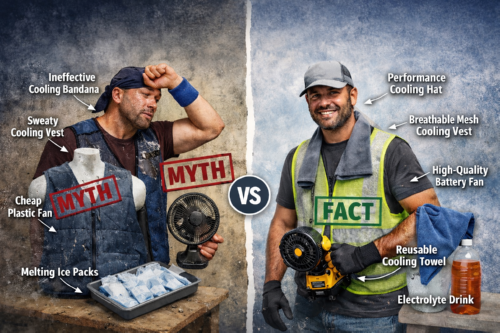
Cooling Gear Myths: What Really Works (and What Doesn’t)
As temperatures rise, cooling gear becomes a common topic on jobsites but so do misconceptions about what actually works. From old-school tricks to trendy products promising instant relief, not all cooling solutions deliver meaningful protection against heat stress. Relying on ineffective gear can create a false sense of safety, putting workers at risk during long, hot workdays. Understanding the myths surrounding cooling gear and knowing which solutions are proven to help allows supervisors and crews to make informed decisions that improve comfort, compliance, and safety in demanding summer conditions.
1. Myth: Any Wet Cloth Will Keep You Cool
One of the most common assumptions is that simply getting something wet is enough to cool the body.
- The reality: Plain cotton rags or bandanas warm quickly and stop cooling once saturated.
- Why it fails: Cotton holds water but does not promote sustained evaporation.
- What works instead: Evaporative cooling towels designed to retain water while allowing airflow.
2. Myth: Cooling Gear Eliminates the Need for Hydration
Some workers assume cooling vests or towels replace the need to drink water.
- The reality: Cooling gear does not prevent dehydration.
- Why it’s dangerous: Dehydration reduces the body’s ability to regulate temperature.
- What works instead: Cooling gear should support not replace frequent hydration.
3. Myth: Thicker Gear Provides Better Cooling
Bulkier gear is often mistaken for better protection.
- The reality: Excessively thick materials trap heat and restrict airflow.
- Why it fails: Added insulation increases thermal load on the body.
- What works instead: Lightweight, breathable materials that promote evaporation.
4. Myth: Cooling Vests Work the Same in All Conditions
Not all cooling vests perform equally across environments.
Evaporative vests are most effective in dry or moderately humid conditions, while phase-change vests perform better in high humidity. Assuming one vest works everywhere can lead to poor results. Matching cooling technology to environmental conditions is critical for effectiveness.
5. Myth: Cooling Gear Is Only for Extreme Heat
Cooling PPE is often treated as a last resort.
Heat stress can occur even in moderate temperatures, especially during high-exertion tasks or when workers are not acclimated. Introducing cooling gear early helps manage body temperature before symptoms develop, making it more effective as a preventive tool rather than an emergency response.
6. What Cooling Gear Actually Works
Proven cooling solutions are designed with physiology and jobsite realities in mind.
- Evaporative cooling towels and dew rags: Target high blood-flow areas like the neck.
- Cooling vests: Reduce core temperature during extended work.
- Ventilated helmets and headwear: Improve airflow and reduce head heat buildup.
7. Cooling Gear Works Best as Part of a System
No single product can solve heat stress on its own.
Cooling gear is most effective when combined with hydration, rest breaks, shade, acclimatization, and proper scheduling. Employers should treat cooling PPE as one layer in a comprehensive heat illness prevention strategy rather than a standalone solution.
Bonus Tip:
Test cooling gear with a small group of workers first and gather feedback before rolling it out site-wide.
Conclusion
Cooling gear can play a valuable role in protecting workers but only when expectations are realistic and products are chosen wisely. Myths about quick fixes, bulky gear, or replacing hydration can undermine safety efforts and increase risk. By understanding what cooling solutions actually work and integrating them into a broader heat safety plan, employers can improve comfort, compliance, and protection during hot work conditions. Smart cooling strategies are based on science, not shortcuts.
Explore cooling PPE and heat stress solutions at Abolox and equip your team with gear that truly performs in the heat.
Supporting Articles & References
Debunking Heat Stress Myths – SlateSafety
Breaks down common misconceptions about heat stress and explains evidence-based strategies that actually help protect workers in hot environments.
Tagged Products


