Logo200.png)

Box Wrench vs. Open-End Wrench: Which One to Choose
When loosening or tightening nuts and bolts, having the proper wrench can make a significant difference in the success and efficiency of your projects. Two common types of wrenches used for this purpose are the box wrench and the open-end wrench. Both have their strengths and weaknesses, and understanding their differences will help you determine which is best suited for your specific tasks. In this blog, we'll compare box and open-end wrenches, exploring their unique features, advantages, and ideal applications to help you make an informed choice.
Box Wrench
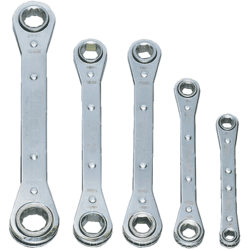
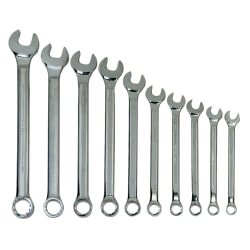
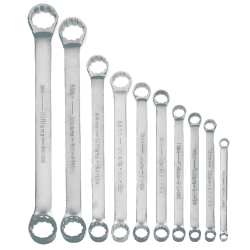
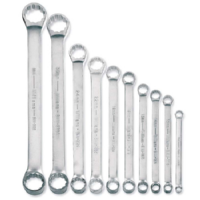
A box wrench, known as a ring spanner, features a closed-loop, ring-shaped end with a hexagonal or 12-point opening. This design allows the box wrench to fit snugly around the fastener, providing a secure grip on all six or twelve sides. Box wrenches are available in both single-ended and double-ended configurations. The single-ended box wrench has a box end on one side and a flat or open end on the other, while the double-ended box wrench has a box end on both sides, each with a different size.
Advantages of Box Wrenches
- a) Precise Grip: The enclosed design of the box wrench ensures maximum contact with the fastener, reducing the risk of slipping or rounding off the edges.
- b) Enhanced Torque: The box wrench's closed-loop design allows for higher torque than an open-end wrench, making it suitable for stubborn or tightly fastened nuts and bolts.
- c) Ideal for Tight Spaces: Box wrenches with offset or flexible heads can easily access nuts and bolts in confined or hard-to-reach areas.
- d) Multiple Sizes in One: Double-ended box wrenches offer two sizes in a single tool, providing versatility for various fastener sizes.
Open End Wrench
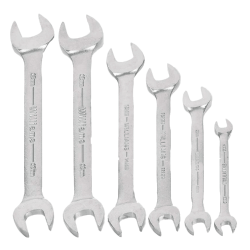
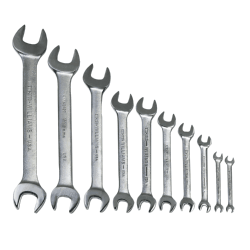
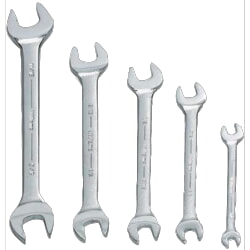
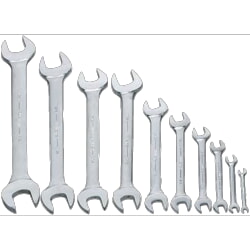
An open-end wrench, or an open-ended spanner, consists of two parallel jaws with smooth, flat surfaces on each end. These jaws are usually at a 15-degree angle from the wrench's handle, providing a better grip on the fastener. Open-end wrenches are available in both single-ended and double-ended configurations, with the single-ended version featuring an open end on one side and a closed end (box end) on the other.
Advantages of Open-End Wrenches
- a) Greater Accessibility: The slim design of open-end wrenches allows them to fit into tight spaces where a box wrench might not have enough clearance.
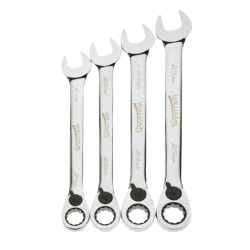
- b) Ratcheting Option: Some open-end wrenches have a ratcheting mechanism, allowing continuous rotation without repositioning the wrench.
- c) Lightweight and Compact: Open-end wrenches are often more lightweight and compact than box wrenches, making them easy to carry and store.
- d) Ideal for Standard Nuts and Bolts: Open-end wrenches work well with standard hexagonal nuts and bolts and are commonly used in household repairs and furniture assembly.
Comparison: Box Wrench vs. Open-End Wrench
A. Versatility
- Box Wrench: Box wrenches are more versatile when handling different fasteners, including 6-point and 12-point bolts. The closed-loop design ensures a more precise and secure grip, making them suitable for various tasks.
- Open-End Wrench: Open-end wrenches are suitable for standard 6-point nuts and bolts. While some ratcheting open-end wrenches offer increased flexibility, they might provide a different level of precision than box wrenches.
B. Torque Application
- Box Wrench: Due to the closed-loop design, box wrenches can handle higher torque applications, making them ideal for stubborn or tightly fastened nuts and bolts.
- Open-End Wrench: Open-end wrenches may be less effective for high-torque applications, as their smooth jaws may slip off the fastener under heavy force.
C. Accessibility
- Box Wrench: Box wrenches with offset or flexible heads can access nuts and bolts in confined spaces, providing better reach than standard open-end wrenches.
- Open-End Wrench: The slim profile of open-end wrenches allows them to fit into tight spaces more easily than box wrenches.
D. Speed and Convenience
- Box Wrench: Double-ended box wrenches offer two different sizes in one tool, saving time and reducing the need to switch between wrenches.
- Open-End Wrench: Ratcheting open-end wrenches offer continuous rotation, eliminating the need to reposition the wrench for each turn, which can benefit repetitive tasks.
E. Specialized Applications
- Box Wrench: Box wrenches are commonly used in automotive repairs, plumbing projects, and machinery maintenance, where higher torque and secure gripping are essential.
- Open-End Wrench: Open-end wrenches are frequently used in household repairs, furniture assembly, and tasks that require quick and easy access to standard nuts and bolts.
Tagged Products