Logo200.png)
The Truth About Reflective vs. Hi-Vis Workwear
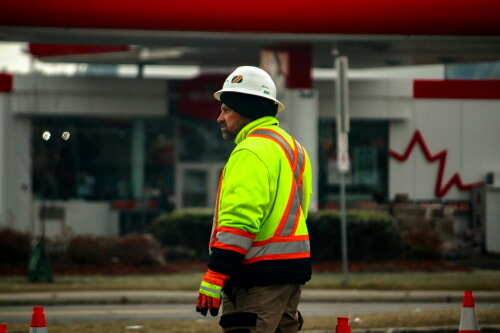
Visibility-related incidents remain a leading cause of serious injuries on construction sites, roadways, warehouses, and industrial facilities. Workers are often required to wear “hi-vis” clothing, but confusion still exists about what that actually means and how reflective materials fit into the equation. Reflective workwear and high-visibility (hi-vis) apparel are often used interchangeably, yet they serve different purposes and perform best under different conditions. Understanding the truth about reflective versus hi-vis workwear helps safety managers select the right garments, meet compliance requirements, and keep workers visible in both daytime and low-light environments.
1. What Is Hi-Vis Workwear?
High-visibility workwear is designed to make workers stand out during daylight or well-lit conditions by using bright, fluorescent colors.
- Fluorescent fabrics: Colors such as lime-yellow, orange, and red enhance contrast against natural backgrounds.
- Daytime effectiveness: Hi-vis colors are most effective in daylight or under artificial lighting.
- ANSI classifications: Hi-vis garments are categorized by visibility level (Class 1, 2, or 3) based on coverage and design.
2. What Is Reflective Material?
Reflective material is engineered to reflect light back toward its source, improving visibility in low-light or nighttime conditions.
- Retroreflective tape: Uses glass beads or prismatic materials to bounce light back to drivers or equipment operators.
- Low-light performance: Reflective elements are most effective when illuminated by headlights or work lights.
- Movement recognition: Reflective striping helps others identify human motion, not just color.
3. Why Hi-Vis Alone Is Not Enough
A common misconception is that bright colors alone provide adequate protection in all conditions. In reality, hi-vis fabrics lose effectiveness at night or in dim environments.
Without reflective material, hi-vis garments may blend into dark surroundings once natural light fades. This is especially dangerous for road crews, night-shift workers, and jobsites operating around vehicle traffic or heavy equipment after sunset.
4. Why Reflective Alone Is Also Not Enough
Reflective material requires an external light source to function. In daylight, reflective tape offers minimal visibility benefits on its own.
Garments that rely primarily on reflective elements without fluorescent backgrounds may not stand out against busy or visually complex environments during the day. This is why most compliant safety apparel combines both features.
5. The Best Solution: Combining Hi-Vis and Reflective
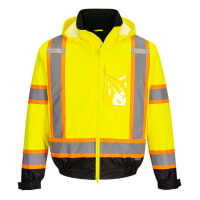
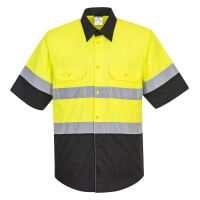
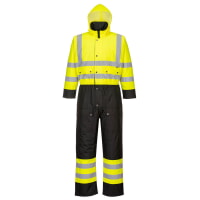
The most effective safety workwear uses both fluorescent fabric and reflective striping to ensure visibility in all lighting conditions.
- Day-to-night protection: Fluorescent colors work during the day, while reflective tape activates at night.
- ANSI-compliant designs: Class 2 and Class 3 garments typically require reflective striping in specific configurations.
- Improved recognition: The combination helps drivers and equipment operators quickly identify workers as people, not obstacles.
This dual-function approach is essential for construction, utilities, transportation, warehousing yards, and any environment with moving vehicles or equipment.
Bonus Tip:
Choose hi-vis garments with reflective striping on the torso and sleeves to improve 360-degree visibility and motion recognition.
Conclusion
The truth about reflective versus hi-vis workwear is that neither works effectively alone in all conditions. Hi-vis colors excel in daylight, while reflective materials are critical for low-light and nighttime visibility. The safest option and often the compliant one is workwear that combines both elements. By understanding how each component functions, safety managers can make informed decisions that protect workers, reduce struck-by incidents, and maintain visibility across every shift and lighting condition.
Explore hi-vis and reflective workwear at Abolox and equip your team with visibility solutions built for real-world conditions.
Supporting Articles & References
Understanding Hi-Vis Standards and Replacing Used High-Visibility Apparel – Ergodyne
Explains ANSI/ISEA high-visibility apparel standards and outlines when worn or faded hi-vis gear should be replaced to maintain worker visibility and compliance.
High-Visibility Safety Apparel Fact Sheet – Oregon OSHA
Provides guidance on selecting and using high-visibility safety apparel to protect workers exposed to vehicle and equipment traffic in various work environments.
Tagged Products