Logo200.png)
Introduction
Grinders are versatile tools essential in various trades, from metalworking to woodworking. However, with different types of grinders available, it’s crucial to understand which one suits your specific needs. In this guide, we’ll compare three popular types of grinders: Angle Grinders, Bench Grinders, and Die Grinders. We’ll explore their features, uses, and benefits to help you make an informed choice.
1. Angle Grinders
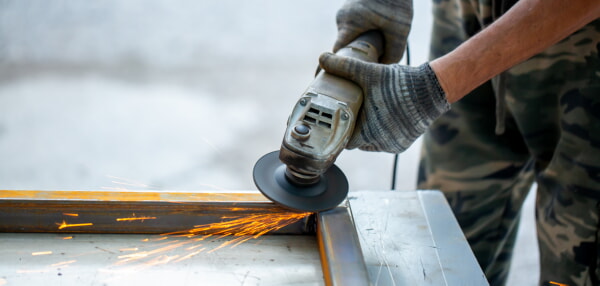
Overview: Angle grinders are handheld power tools with a rotating disc that can cut, grind, or polish a wide range of materials, including metal, concrete, and stone. They are commonly used in metalworking, construction, and fabrication.
Best For: Cutting, grinding, and polishing metal, masonry, and tile.
Key Features:
- Disc Sizes: Typically available in 4.5 to 9 inches.
- Speed: High RPM, suitable for fast cutting and grinding.
- Versatility: Can be used with various attachments for different tasks.
Pros:
- Highly versatile for different materials and tasks.
- Portable and easy to handle.
- Wide range of discs and accessories available.
Cons:
- Can be dangerous if not used correctly.
- Requires a steady hand for precise work.
Pro Tip: Always wear protective gear, including gloves and goggles, when using an angle grinder to prevent injuries from sparks and debris.
2. Bench Grinders
Overview: Bench grinders are stationary machines used for grinding, sharpening, and shaping metal tools and parts. They are typically mounted on a workbench and feature two grinding wheels that rotate at high speed.
Best For: Sharpening tools, deburring, and shaping metal parts.
Key Features:
- Dual Wheels: Allows for different grit wheels for coarse and fine grinding.
- Adjustable Tool Rest: Provides support and precision when grinding.
- Sturdy Base: Ensures stability during use.
Pros:
- Excellent for sharpening and maintaining tools.
- Provides precise and consistent results.
- Durable and built for long-term use.
Cons:
- Limited to stationary use.
- Takes up workspace on the bench.
Pro Tip: Regularly dress the grinding wheels to keep them sharp and effective, ensuring the best results with your bench grinder.
3. Die Grinders
Overview: Die grinders are compact, handheld tools with a rotating spindle that drives a variety of bits and attachments. They are used for grinding, sanding, honing, and polishing small parts, making them ideal for intricate work.
Best For: Detailed work on metal, plastic, and wood; finishing tasks.
Key Features:
- Compact Size: Allows for precision work in tight spaces.
- High RPM: Ideal for detailed grinding and shaping.
- Variety of Attachments: Compatible with bits, burrs, and polishing pads.
Pros:
- Perfect for precision work and finishing.
- Lightweight and easy to maneuver.
- Suitable for a variety of materials and applications.
Cons:
- Not suited for heavy-duty grinding tasks.
- Requires frequent bit changes for different tasks.
Pro Tip: Use carbide burrs with your die grinder for efficient and smooth material removal on metal surfaces.
Conclusion
Choosing the Right Grinder: The right grinder depends on your specific needs. Angle grinders are versatile for heavy-duty tasks, bench grinders are perfect for tool maintenance and shaping, and die grinders excel in precision work and finishing.
Explore More: At Abolox, we offer a wide range of grinders to meet your needs. Visit our grinder selection to find the perfect tool for your workshop.
Tagged Products
![MCR Safety 1317 Cowhide Full Leather Work Gloves Back With Rubberized Cuff [12 PACK]](assets/images/mcr/thumbnails/1317_thumb.jpg)
![MCR Safety 3613 Goatskin Leather Glove With Keystone Thumb[12 PACK]](assets/images/mcr/thumbnails/3613_thumb.jpg)



![Radians BG1-91 Barricade Anti Fog Safety Goggles Indoor/Outdoor Anti-Fog [10 PACK]](assets/images/_radians/thumbnails/Radians_BG1-91_thumb.jpg)


![Radians GGP111ID Perforated Clear Anti-Fog Lens Safety Goggles [12 PACK]](assets/images/_radians/thumbnails/Radians_GGP111ID_thumb.jpg)
![Radians GGP11UID Perforated Side Shields, Uncoated Clear Lens Safety Goggles, Elastic Strap [12 PACK]](assets/images/_radians/thumbnails/Radians_GGP11UID_thumb.jpg)


