Logo200.png)
Comparing PPE Materials: Kevlar, Nomex, and Beyond
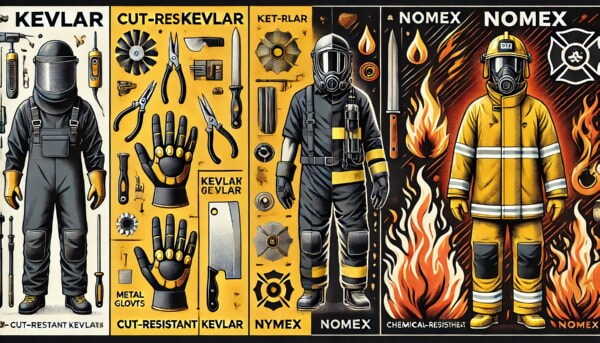
Choosing the right material for personal protective equipment (PPE) is essential for ensuring the safety and comfort of workers across various industries. Materials like Kevlar and Nomex have become industry standards for offering **cut resistance, heat protection, and durability**, but each has its own specific strengths. In this blog, we’ll compare these materials and explore other emerging options to help you choose the best PPE for your needs.
Kevlar: Exceptional Cut and Puncture Resistance
Kevlar is known for its high tensile strength-to-weight ratio, making it ideal for PPE in environments where cut protection is a priority. Kevlar gloves, sleeves, and clothing are commonly used in manufacturing, construction, and metalworking industries.
- Benefits: Cut-resistant, lightweight, and flexible.
- Best For: Jobs requiring protection from sharp objects and tools, such as **metal fabrication** or **glass handling**.
- Limitations: Kevlar is not flame-resistant and degrades when exposed to ultraviolet (UV) rays over time.
Nomex: Flame Resistance for Extreme Heat
Nomex is a meta-aramid material designed for fire resistance. It doesn’t melt or drip when exposed to high temperatures, making it ideal for industries where workers are exposed to **flames or heat**.
- Benefits: Exceptional thermal stability and flame resistance.
- Best For: Firefighters, utility workers, and employees working in **oil and gas** environments.
- Limitations: Nomex provides less cut resistance than Kevlar and may wear down faster in abrasive environments.
Other PPE Materials: What’s Emerging?
- Dyneema®: Known as one of the strongest fibers in the world, Dyneema offers high cut resistance while being lightweight and breathable.
- Polyethylene Blends: Increasingly used in protective gloves for **chemical resistance** and lightweight durability.
- PBI (Polybenzimidazole): PBI provides excellent flame resistance and is commonly used in **firefighter turnout gear**.
How to Choose the Right PPE Material
Selecting the best material depends on your industry’s needs and **specific risks**. For example, Kevlar is perfect for jobs involving sharp tools, while Nomex offers unmatched flame resistance for hazardous environments. Workers exposed to multiple risks may require **hybrid PPE** that combines different materials, like gloves with **Kevlar lining and Nomex outer shells**.
Conclusion: The Right Material for Every Job
Understanding the differences between **Kevlar, Nomex, and other PPE materials** is essential for choosing the right gear. Whether you need protection from **sharp objects**, **extreme heat**, or **chemical exposure**, there’s a material designed to meet your needs. As new technologies emerge, PPE materials will continue to evolve—offering better safety, durability, and comfort. Invest in the right material today to protect your workforce and keep your operations running smoothly.
Tagged Products
![MCR Safety 16010 Sidekick Leather Gloves Kevlar, 2.5" Cuff [12 PACK]](assets/images/mcr/thumbnails/16010_thumb.jpg)


![Radians RWG530 Cut Level A2 Work Glove 13 Gauge [12 PACK]](assets/images/_radians/thumbnails/Radians_RWG530S_thumb.jpg)

![Radians RWG557 Cut Level A4 PU Coated Work Gloves [12 PACK]](assets/images/_radians/thumbnails/Radians_RWG557S_thumb.jpg)
![Radians RWG560 Cut Level A4 PU Coated Work Gloves [12 PACK]](assets/images/_radians/thumbnails/Radians_RWG560XS_thumb.jpg)
